India has long been recognized as the cradle of the great Eastern religions—Hinduism, Buddhism, and Jainism. The presence of Christianity and Islam in India can also be traced back to the earliest centuries of their existence.
The Malankara Orthodox Syrian Church traces its origins to the apostolic ministry of St. Thomas, one of the Twelve Disciples of Jesus Christ, who is believed to have arrived on the Malabar Coast in A.D. 52. Ancient texts such as the Acts of Thomas, along with the living traditions of the St. Thomas Christians of Kerala, bear witness to this two‑thousand‑year‑old Christian presence. Historical evidence of flourishing trade between the Malabar Coast and the Middle East further supports this tradition.
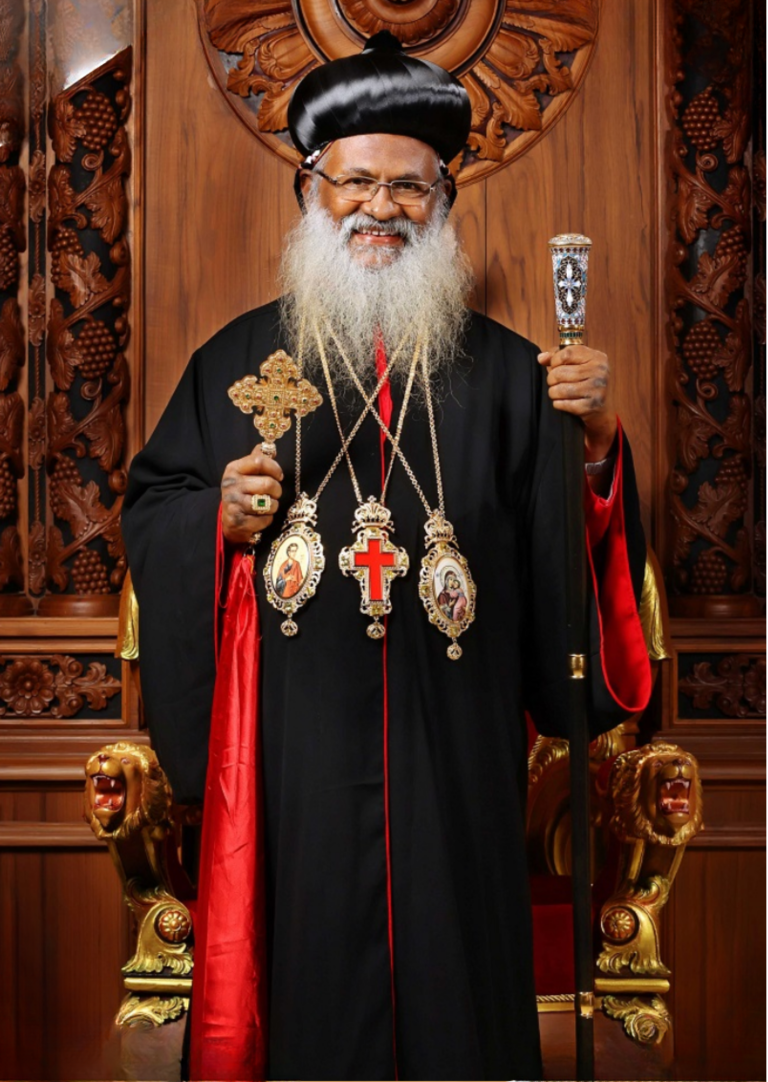
Throughout its long history, the Church has lived through periods of foreign contact, cultural exchange, and political upheaval. Today, it remains autocephalous, governed by the Catholicos of the East.
The Malankara Orthodox Syrian Church belongs to the family of Oriental Orthodox Churches, together with the ancient churches of Armenia, Ethiopia, Eritrea, Egypt, and Antioch. It follows the West Syriac liturgical tradition of the Antiochian Orthodox Church, and many of its original liturgical texts were composed in the West Syriac language. As the Church grew, its ancient West Syriac liturgical texts were translated into Malayalam, the lingua franca of the people of Kerala. From its strong roots in Kerala, the Church expanded to every state in India and eventually to almost every continent in the world. With this growth, the Church began worshipping in multiple languages. In India, services are offered in Tamil, Konkani, and Hindi, in addition to Malayalam. Across the world, the Church worships in English, Spanish, and many other languages, reflecting its global presence and the diverse communities it serves.
This linguistic and cultural adaptability continues to demonstrate the living tradition of the Malankara Orthodox Syrian Church as it carries forward the apostolic faith of St. Thomas into new regions and generations.